Wood screw size chart
Look up numbered wood-screw gauges (#0–#20) against major diameter in inches and millimetres. Hole sizes stay on the pilot-hole size chart. Find your size opens the screw-to-drill tool for #4–#14 only.
How to read this chart
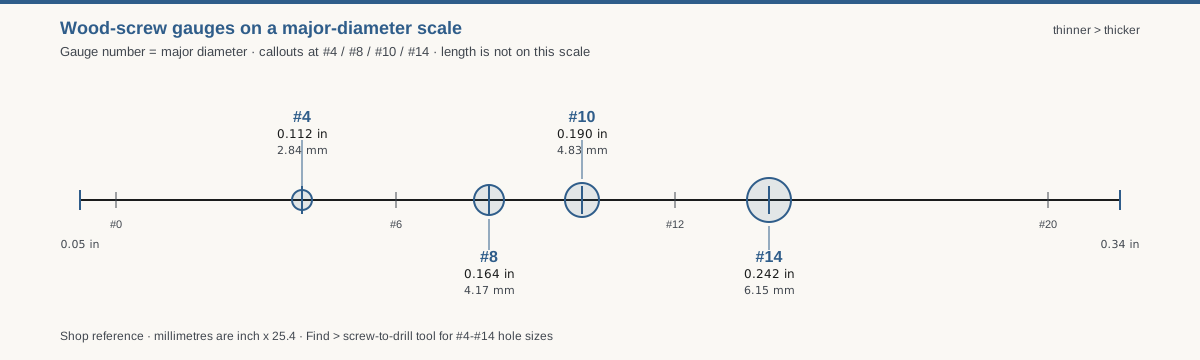
This chart converts a numbered wood-screw size into major diameter. Read the gauge column first (#6, #8, #10), then the decimal-inch major diameter, then the millimetre column, which is that inch value times 25.4 rounded to two places — not a separately measured millimetre standard. Nearest fractional inch is a shop shorthand for the decimal, not a tolerance band. Length is not on this table: packs sell the same gauge in several lengths. Pilot, clearance, and countersink holes are on the pilot-hole size chart. For gauges #4 through #14 you can open Find your size to load the screw-to-drill tool with that numbered size. Gauges #0–#3, #11, #16, #18, and #20 have diameter only; do not invent a drill label for them. Shop-fit values, not structural or manufacturer warranty tables.
When you already know the numbered size on the box, start at that gauge row and ignore every other column until the decimal-inch diameter matches what you expect. If a pack prints a millimetre size instead, use the converted millimetre column as a check, then go back to the numbered gauge for tool lookup. Find on a row is only present for gauges the screw-to-drill tool actually knows. Empty Find cells mean diameter only — hop to the pilot-hole chart if you still need a starter hole, and do not guess a bit from the decimal alone.
Wood screw sizes
Seventeen published gauges from #0 through #20. Millimetre values are converted from the inch column (inch × 25.4, rounded to two decimal places). Click Find only where the screw-to-drill tool knows that numbered size. Other rows list diameter only.
| Gauge | Major Ø (in) | Major Ø (mm, converted) | Nearest fractional | Find |
|---|---|---|---|---|
| #0 | 0.06 | 1.52 | 1/16" | Diameter only |
| #1 | 0.073 | 1.85 | 5/64" | Diameter only |
| #2 | 0.086 | 2.18 | 3/32" | Diameter only |
| #3 | 0.099 | 2.51 | 7/64" | Diameter only |
| #4 | 0.112 | 2.84 | 7/64" | Find |
| #5 | 0.125 | 3.17 | 1/8" | Find |
| #6 | 0.138 | 3.51 | 9/64" | Find |
| #7 | 0.151 | 3.84 | 5/32" | Find |
| #8 | 0.164 | 4.17 | 5/32" | Find |
| #9 | 0.177 | 4.50 | 11/64" | Find |
| #10 | 0.19 | 4.83 | 3/16" | Find |
| #11 | 0.203 | 5.16 | 13/64" | Diameter only |
| #12 | 0.216 | 5.49 | 7/32" | Find |
| #14 | 0.242 | 6.15 | 1/4" | Find |
| #16 | 0.268 | 6.81 | 17/64" | Diameter only |
| #18 | 0.294 | 7.47 | 19/64" | Diameter only |
| #20 | 0.32 | 8.13 | 5/16" | Diameter only |
When this chart is not enough
This page is a diameter lookup. It is not a hole chart, not a length chart, and not a structural table. Use it to read the numbered size on a pack, then leave for the page that owns the next number you need.
- Pilot, clearance, and countersink sizes live on the pilot-hole size chart, not in extra columns here.
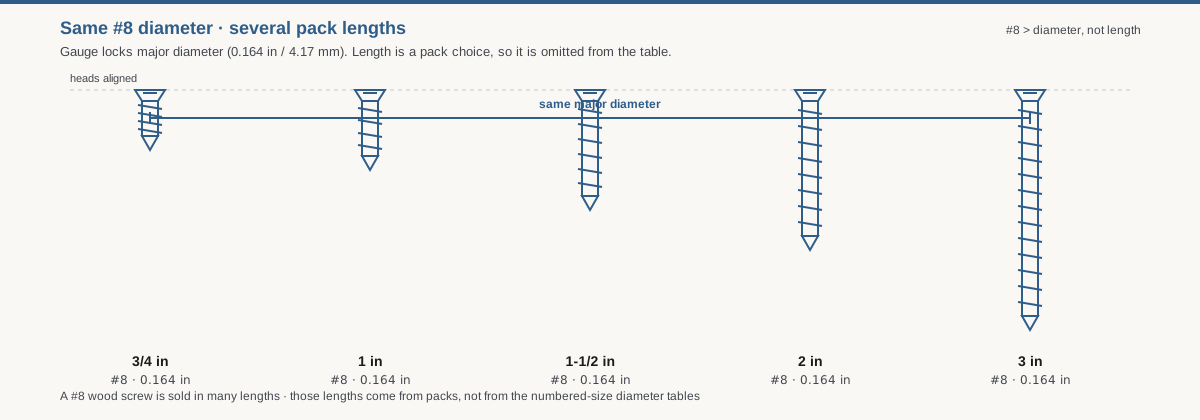
- Length is a pack choice. The same #8 ships in several lengths; those lengths are not a property of gauge, so they are omitted here.
- Missing numbers such as #13, #15, #17, #19, and #24 are not in the paired diameter tables this chart uses. If a pack is marked with a missing number, read the printed major diameter instead of forcing a row.
- Values are workshop reference. Confirm the screw maker’s table for structural or production work.
Related
- Fasteners — hub for screw, hole, and tap charts in this family.
- Pilot hole size chart — softwood and hardwood pilots, clearance, and machine-screw tap drills.
- Screw-to-drill tool — lock a numbered wood screw (#4–#14) and read the matching drill labels.
- Tap drill size chart — metric and UNC/UNF taps with shop tap-drill labels.
- Drill bit size chart — fractional, metric, number, and letter bit diameters.
Sources
Decimal-inch major diameters follow Engineering Toolbox wood-screw nominal shank tables and the Bolt Depot wood-screw diameter page. Millimetres are inch × 25.4, rounded to two decimal places — a conversion, not a second measured column. Unified numbered-screw major diameters and a shop diameter column are used as a cross-check where those series overlap. This page is a workshop reference, not a certified engineering standard.
- Engineering ToolBox — US Wood Screws — Pilot Holes (Nominal Size / Nominal Shank Diameter) and companion shank-diameter table (page dateModified 2023-09-11; table retrieved 2026-08-21).
- Bolt Depot — US Wood Screw Diameters — Major Thread Diameter (decimal + nearest fractional) (current Fastener Info page, retrieved 2026-08-21).
- Wikipedia (compiled from ASME B1.1 Unified Thread Standard tables) — Unified Thread Standard — numbered-screw major diameter Dmaj (current article, retrieved 2026-08-21).
- Power Tool Insider — Pilot Hole Screw Size Chart — Screw Diameter (in) column (current article, retrieved 2026-08-21).
FAQ
What does a wood-screw size number mean?
A wood-screw size number is a gauge, not a length. #8 means the screw’s major diameter is 0.164 in (about 4.17 mm), nearest common fraction 5/32". Larger numbers are thicker. The same #8 is sold in several lengths. Use this chart to read diameter; open the pilot-hole chart when you need a starter-hole size.
Are wood screw sizes listed in inches or millimetres?
US numbered wood screws are specified in decimal inches. This chart also shows millimetres as inch × 25.4, rounded to two decimal places — a conversion, not a second measured table. Nearest fractional inch is a shop approximation of that decimal, not a manufacturing tolerance. Pack labels in the US still use the numbered size (#6, #8, #10) plus a separate length in inches.
Why doesn’t this chart list screw length?
Length is not a function of gauge. A #8 wood screw is sold in many lengths; those lengths come from manufacturer packs, not from the numbered-size diameter tables. This page lists gauge, major diameter in inches and millimetres, and the nearest fractional inch. If you need a starter hole, open the pilot-hole size chart or the screw-to-drill tool — those pages still do not invent a length column.
Where do I look up the pilot hole for a wood screw?
Pilot, clearance, and countersink sizes live on the pilot-hole size chart, not on this diameter table. For common gauges #4 through #14, use Find your size to open the screw-to-drill tool with that numbered size. Gauges such as #0–#3, #11, #16, #18, and #20 have diameter here but no hole lookup on that tool — do not invent a bit size from the decimal alone.
Why are some numbers like #13 or #24 missing?
The published rows are gauges that appear on both diameter tables this chart uses (#0–#12 plus #14, #16, #18, and #20). Odd sizes such as #13, #15, #17, and #19 are not in those paired tables. #24 appears on one source only, so it is omitted rather than shown from a single list. If a pack is marked with a missing number, read the printed major diameter instead of forcing a row.
Shop-fit diameters for home and light shop work. Not a substitute for a screw maker’s structural table. See the site disclaimer for limits of use.